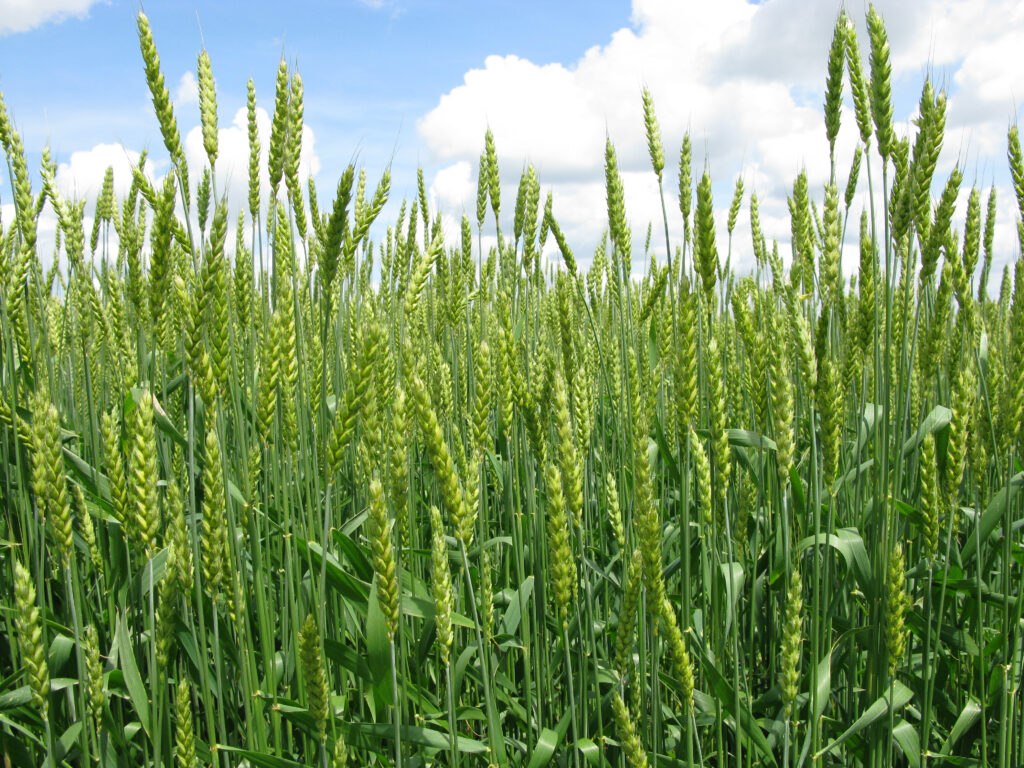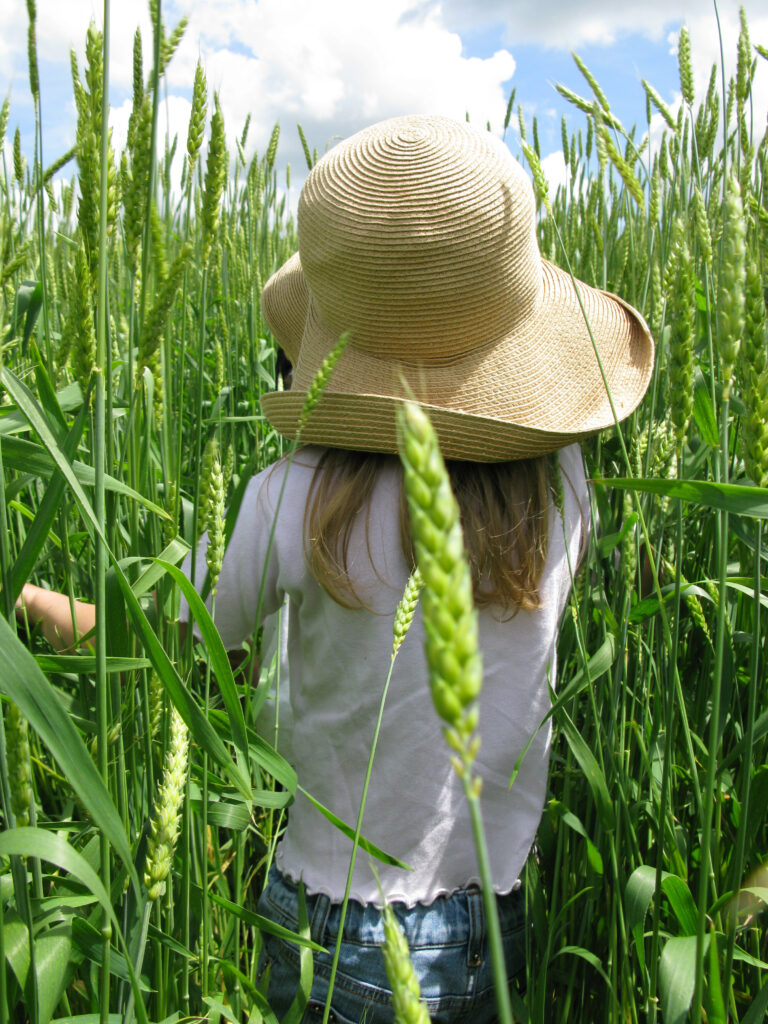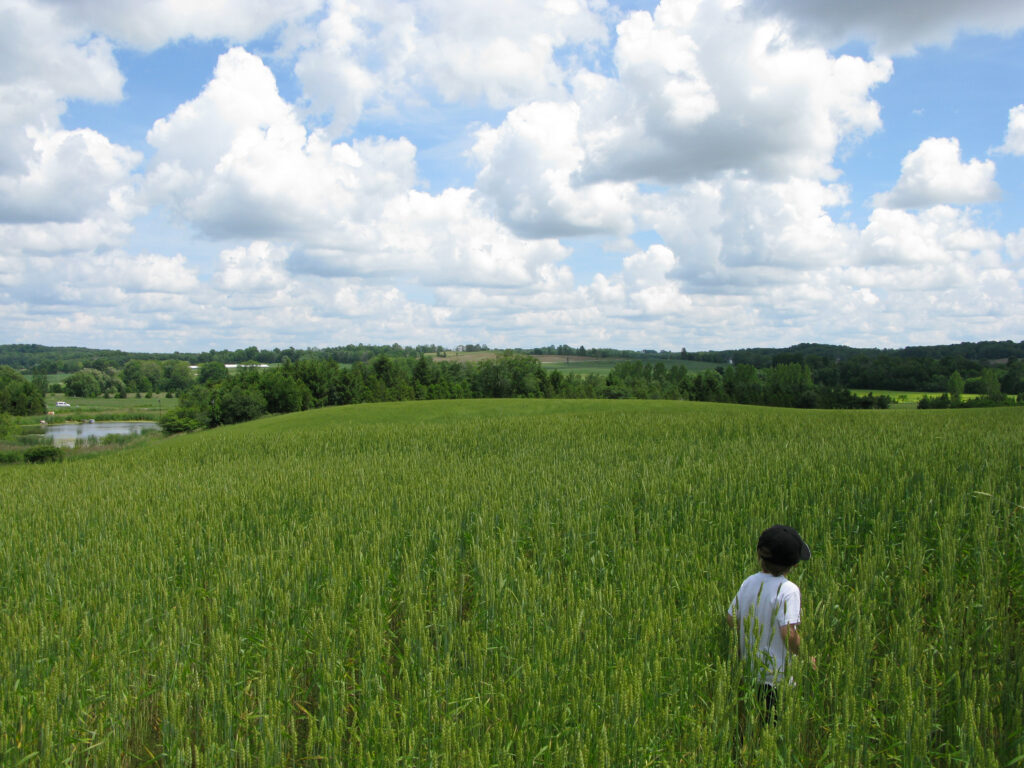
I remember seeing the milk. I remember the fields. The wheat is very, very tall. Some of the cows were tall and some were little. I had strawberry ice cream and Michael had chocolate.“
– Claire, age 5
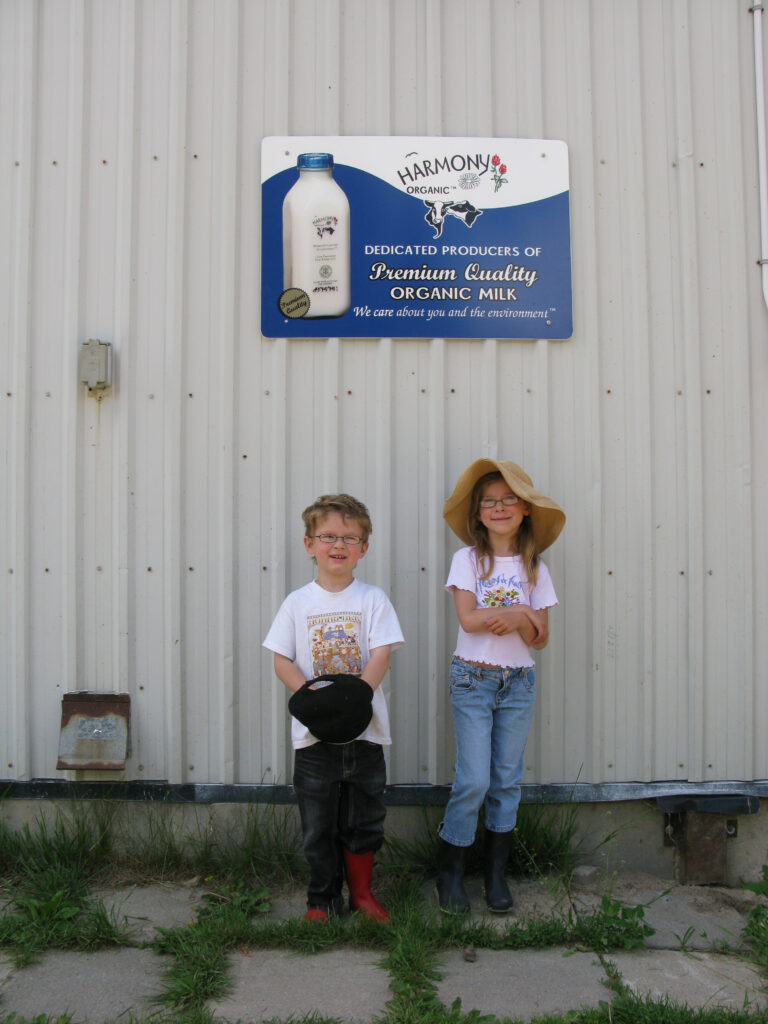
I was excited when Harmony Organics decided to sponsor the 100 mile ART Project in Cambridge. My family has been drinking its milk for years now, and we really enjoy it. But this will also provide a much needed component for the icon in the form of wood glue. When I asked Harmony Organics if I could visit a farm and get a much-needed idea of where the milk I would receive came from, they were quick to send me to Amulree.
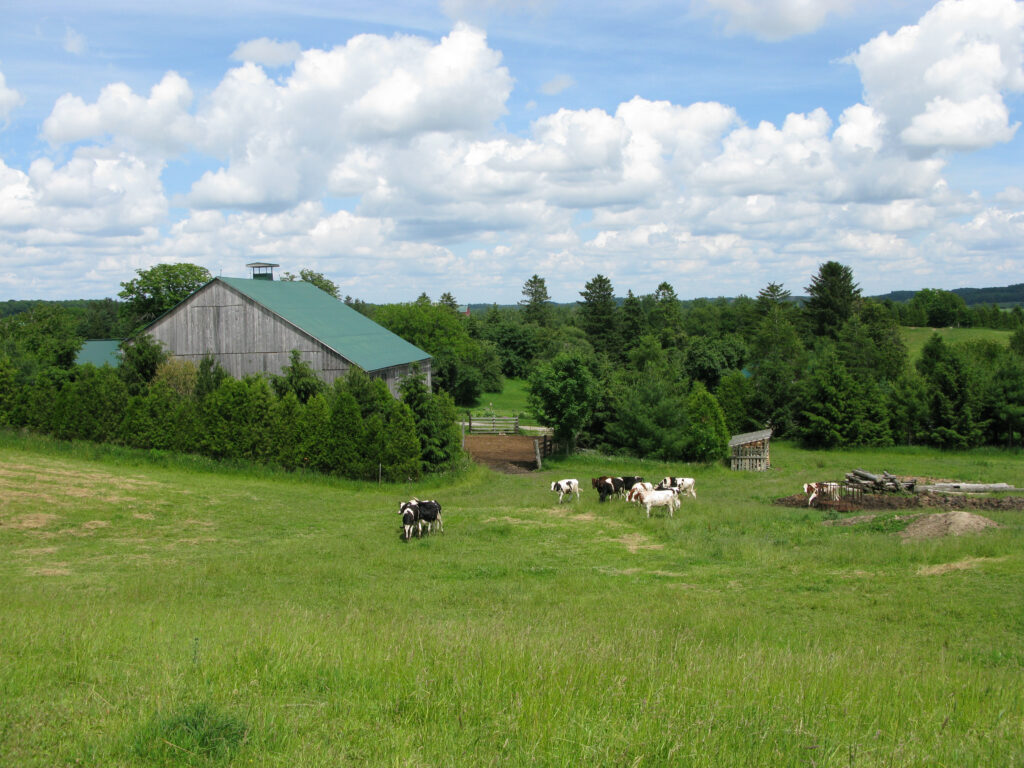
The village of Amulree is just north of Shakespeare and is home to one of the farms that produce milk for Harmony. I was told that my son and daughter were welcome to come along, so we got in our car and went to explore. We arrived just in time to see the big milk truck arrive to pick up the milk. Standing beside one of these trucks, it is amazing to think how much milk is inside once it is full!
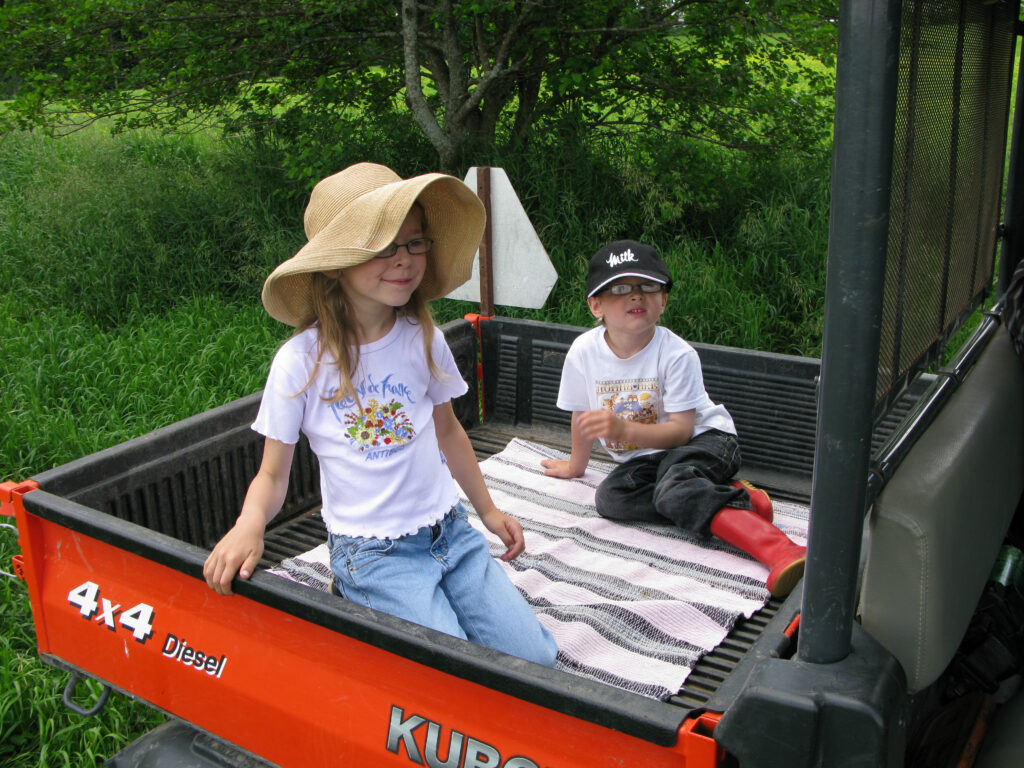
After the milk was finished being transferred to the truck, we said goodbye to the driver and got inside a little ATV vehicle, heading out into the fields. I’m always impressed with the constant assessment that happens in the mind of organic farmers. During our tour, different birds were noted, water levels, even the location of certain weeds, and all these were important because of what they might indicate is happening in the farm’s ecosystem. I can’t help but wonder if being attuned to these little creatures and plants doesn’t give organic farmers a sixth sense about their land. These little communicate snippets to the attentive farmer and help in the management of the land.
Our tour ended where the milk production begins, with the cows out in the pasture. It was fun to see the different responses we were given depending on the cow’s age. The older cows watched; the young cows were engaged and curious. But all was peaceful.
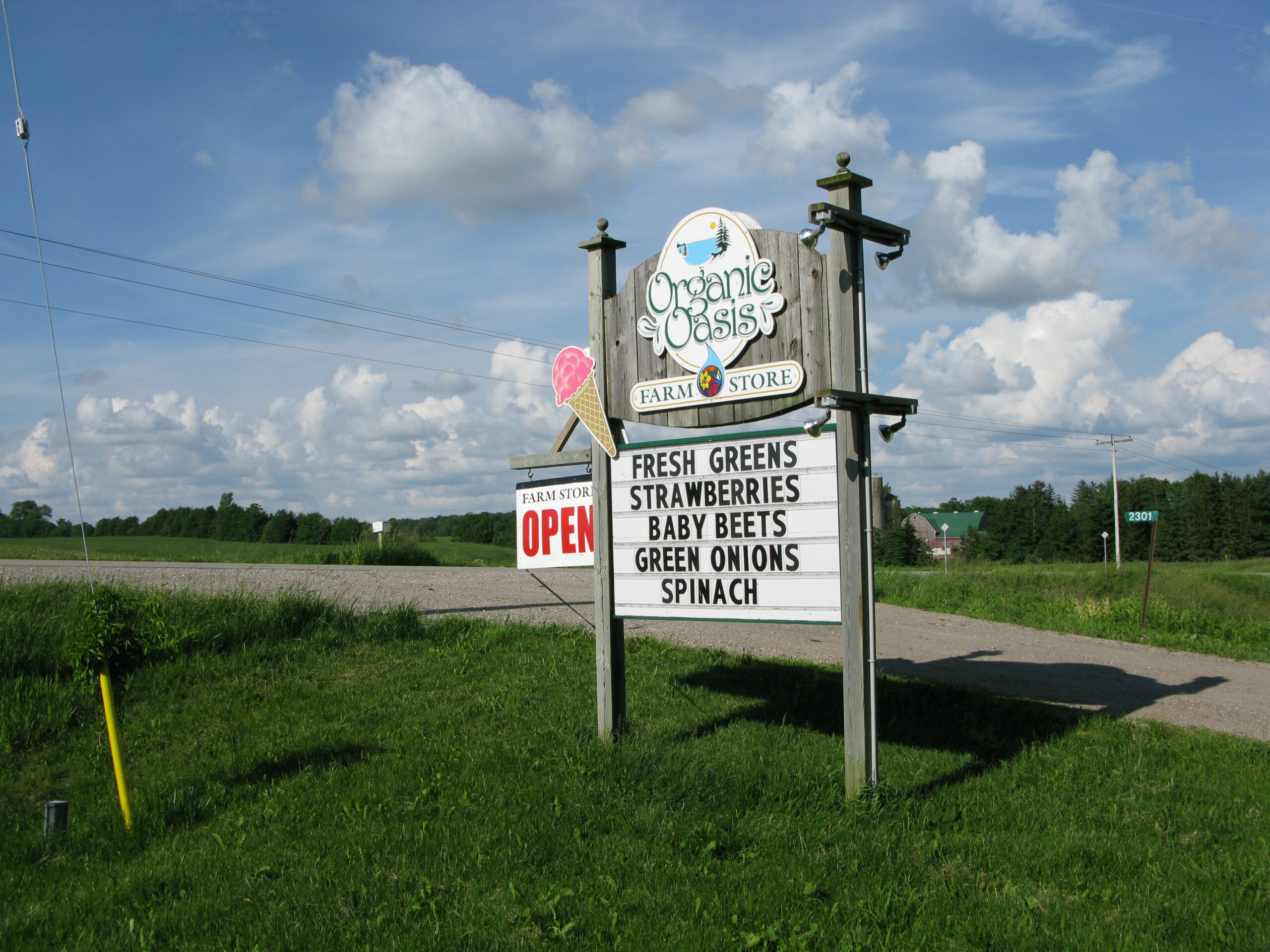
Afterwards, everyone was treated to some nice, cold ice cream at the Organic Oasis store. This is also where I picked up the milk that I’ll be using in creating my icon, and where I generously received extras (such as chocolate milk!) to take home and enjoy in a more traditional manner.
So, why milk? Milk is the base of a natural adhesive that is still in use today called casein glue. Casein is what gives milk its white colour and it can be separated either by adding a light acid to the milk (such as lemon juice) or simply by leaving the milk at room temperature for a few days. If you think this sounds a lot like making cheese, you’re right (in fact, the word casein comes from the Latin word caseus, which means cheese). What makes it such an important glue in this project is that, unlike hide glue, this glue does not remain water-soluble after it cures. It will make an excellent wood glue for the icon.
The casein glue has a long history in wood bonding uses. Going back to my copy of Il Libro dell’ Arte by Cennino D’Andrea Cennini (+1440) he writes,
“There is a glue used by workers in wood; this is made of cheese. After putting it to soak in water, work it over with a little quicklime, using a small board with both hands. Put it between the boards; it joins them and fastens them together well. And let this suffice you for the making of various kinds of glue.”
In modern times this same glue has been used in everything from gluing together wooden aircrafts to sticking labels on beer bottles. In fact, casein-based glue is really the last remaining natural glue still in common use.
After a couple of days outside, the milk had separated into two parts, as you can see. The white firm mass on top is called curds, and the supernatant is called whey.
Before you take a look at this and think, “Yuk!” consider when the last time was that you ate cottage cheese? Because that is what you are looking at (and I don’t think that Little Miss Muffet is completely alone in her enjoyment of the lumps and liquid that make up that wonderful cheese).
Now that these two parts of the skim milk were separate, I could begin to create my special glue!
The separation of the casein isn’t anything overly difficult. I took a stir-stick and gently stirred the casein, which helped it pour out of the bottle. The whey I simply poured off, but the casein I put into a piece of cheesecloth. With this done, I could wash the solids, and after this, twist the cloth so that most of the water was removed.
What surprised me was the smell. It really stinks … but in a good way … like all cheese does. Unfortunately, that wonderful smell wasn’t a true indicator; when I tasted a little bit, I found that it really didn’t have any taste at all!